


%20(1)_edited_edited_edited.png)
Building a Paraeducator System That Actually Works

Updated: Apr 5
In many schools, paraeducators are essential to student success. They support instruction, manage behavior, and help students access learning throughout the day.
Yet in practice, their role is often unclear.
Expectations vary from classroom to classroom. Training is inconsistent. Support systems are reactive instead of proactive. As a result, paraeducators are frequently placed in high-impact roles without the structure needed to be successful.
This creates gaps not because of people, but because of systems.

The Problem
In the school where this work was developed, we saw several consistent challenges:
Lack of clarity around paraeducator roles and responsibilities
Inconsistent expectations across classrooms
Limited training in instructional and behavior support
Reactive problem-solving instead of proactive systems
Communication breakdowns between teachers, paras, and leadership
Even with strong individuals, the system itself was not setting them up for success.
The System
To address this, I developed a Paraeducator Handbook designed to create a clear, consistent, and practical system for support staff.
The handbook provides:
Defined roles and responsibilities
Clear expectations for instructional support
Behavior support systems aligned to school-wide practices
Communication structures between team members
Daily routines and operational guidance
Professional expectations and accountability structures
The goal was simple:
Create a system where paraeducators know exactly what to do, how to do it, and how their work connects to student success.

Key Design Principles
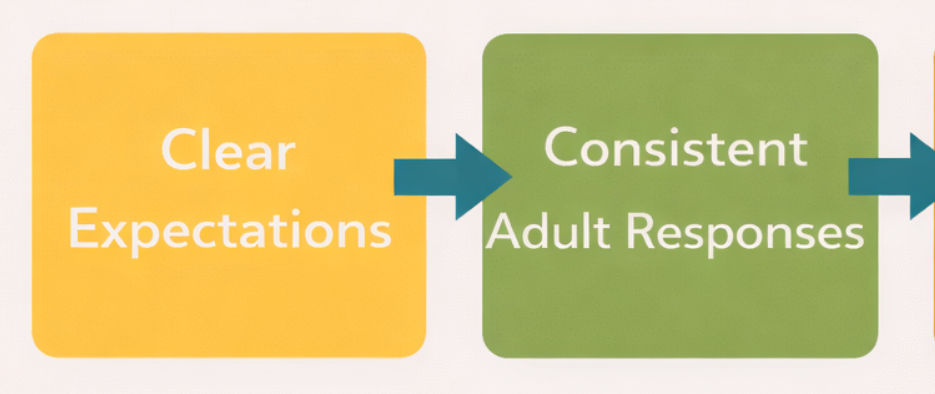
1. Clarity over ambiguity
Every section was written to remove guesswork. Paraeducators should not have to interpret expectations differently across classrooms.
2. Alignment across the school
The handbook ensures consistency in how support is delivered, regardless of setting, teacher, or student need.
3. Practical, not theoretical
This is not a document that sits on a shelf. It is designed for daily use, with actionable guidance that can be implemented immediately.
4. Support before accountability
Clear systems allow for fair accountability. When expectations are defined, teams can grow, reflect, and improve together.

Impact
When systems like this are in place, the shift is noticeable:
Paraeducators feel more confident and supported
Teachers experience more consistent and effective support
Student needs are addressed more proactively
Communication improves across teams
Leadership can focus on coaching instead of constant problem-solving
Most importantly, students receive more consistent and effective support throughout the day.

Why This Matters
Paraeducators are often one of the most under-supported yet high-impact roles in a school.
When we build systems that support them well, we strengthen the entire school.
This work reflects a broader belief I hold as a leader:
Strong outcomes are not the result of individual effort alone. They are the result of clear, aligned, and well-executed systems.

Comments