


%20(1)_edited_edited_edited.png)
Why Consistency and Clarity Matter in Classroom Behavior Systems

One of the biggest mistakes schools make with behavior systems is assuming students understand expectations just because adults have said them.
In reality, classroom behavior systems work best when expectations are simple, visible, repeatable, and reinforced consistently by every adult in the room.
That matters in any classroom, but it matters even more in high-support settings. In specialized classrooms, students may need explicit teaching, visual reminders, predictable routines, and consistent responses in order to feel safe, regulated, and ready to learn. When adults respond differently from one moment to the next, or when expectations are not taught clearly, the classroom can quickly become more reactive than supportive.
That is why I believe strong classroom management is less about control and more about systems.

Students need expectations they can actually understand
A behavior system is only useful if students can access it.
In our classroom, the expectations are intentionally simple:
Follow Directions Quickly,
Keep Hands and Feet to Yourself,
Use Kind Words, and
Try Your Best.
These rules are short, concrete, and easy to revisit throughout the day.
That simplicity matters. Students do better when adults reduce language, teach expectations directly, and return to the same clear phrases over time. In high-support classrooms, this kind of clarity helps students connect behavior expectations to daily routines instead of hearing a new explanation every time something goes wrong.
Because this classroom is bilingual, that clarity matters even more. Students may be processing expectations across more than one language, so simple wording, repeated visuals, and predictable routines make the system easier to access and more consistent to follow.

Consistency across adults is what makes the system real
A classroom behavior plan is not strong because it exists on paper. It is strong when every adult uses it the same way.
The classroom management plan makes that explicit: all adults in the room are expected to follow the same procedures to ensure consistency and fairness. The plan also emphasizes teaching and modeling expectations daily, posting visual supports, frequently praising positive behavior, and using shared procedures across the team.
That is one of the most important leadership lessons inside classroom management. Students should not have to guess which adult means what, which reminder counts, or what happens next. The more consistent the adults are, the more predictable the classroom becomes.
And predictability matters. For many students, especially in high-support settings, predictable responses reduce confusion, lower anxiety, and make it easier to recover from mistakes.
Visual systems reduce confusion
One reason behavior systems often break down is that adults hold the whole system in their own heads. Students are expected to remember expectations, rewards, consequences, and routines based mostly on verbal reminders.
That is rarely enough.
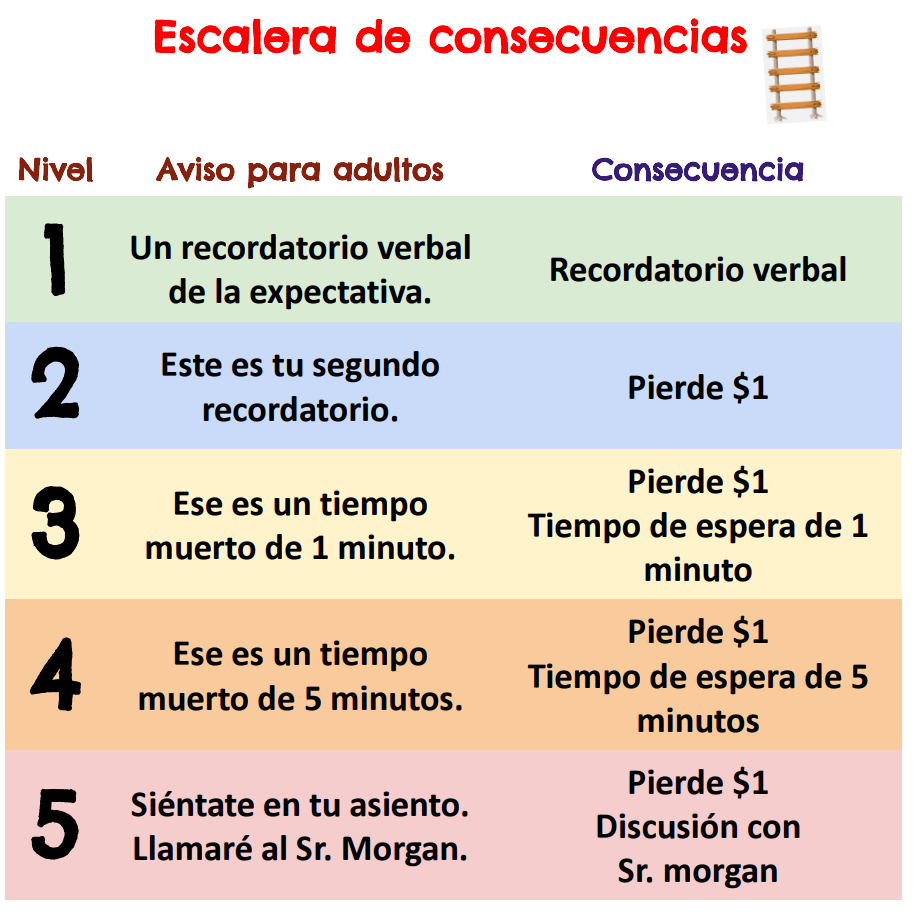
The classroom plan includes visible supports such as the reward ladder and consequence ladder, posted where students can see them. That matters because visual systems make the classroom less abstract. Students can see what the expectations are, what they are working toward, and what happens when they make a poor choice.
The plan also uses a First-Then structure, where students first complete a task or follow a direction and then receive access to a preferred item or activity. The document describes this as a way to clarify expectations and motivate students by showing what comes after the required task.
That is exactly what strong systems do. They reduce uncertainty and make the next step visible.

Reinforcement should be predictable, not random
Another strength of this system is that positive behavior is tied to a clear token economy.
Students earn “dollars” for positive behaviors such as following directions, showing kindness, staying on task, or meeting IEP goals, and they cash in those dollars at designated times during the day. Rewards increase predictably from 5 minutes of play time at $5 to computer/play time, candy, and a positive call home at higher levels.
That predictability matters. Reinforcement works better when students understand how to earn it and when it will happen. A system like this helps move behavior support away from adult mood or random reward delivery and toward something more stable and understandable.

It also sends an important message: positive behavior is noticed, named, and reinforced.
Consequences should be calm, structured, and teachable
A strong behavior system does not ignore consequences. But it should use them in a way that is clear, calm, and connected to learning.
The consequence ladder in this system shows a predictable progression:
verbal reminder
second reminder with loss of $1
1-minute time-out with loss of $1
5-minute time-out with loss of $1
discussion with Mr. Morgan and loss of $1
What I like about that structure is that it removes some of the randomness that often makes classroom management harder. Instead of adults reacting differently depending on the moment, the system creates a known sequence. Students learn what happens next, and adults have a shared path to follow.
Just as important, the plan includes resetting after a consequence. After the time-out or discussion, students rejoin the group and work to earn back positive incentives. That reflects a healthier mindset. The goal is not punishment for its own sake. The goal is helping students return, re-engage, and succeed.

Bilingual classrooms need even more intentional behavior systems
In bilingual settings, behavior support cannot depend only on long verbal explanations.
Students may need visual access, repeated language, modeled routines, and concrete systems that help them connect expectations to action. When classroom rules are simple, visuals are posted, and adult responses are consistent, students have a better chance of understanding what is expected regardless of whether they are processing in English, Spanish, or both.
That is one reason I think behavior systems in bilingual special education settings should be especially intentional. Clarity is not just helpful. It is an access issue.
 |  |
What this means for classroom teams
Strong classroom management is not the responsibility of one adult. It is a team practice.
When adults share expectations, language, routines, and follow-through, the classroom feels more stable. Students know what the rules are. They know how reinforcement works. They know what happens after a poor choice. And they know that the system does not change depending on who is standing nearest to them.
That kind of consistency protects both students and staff.
It reduces unnecessary power struggles. It helps new staff step into the room more successfully. It gives paraeducators and teachers a common structure. And it creates a stronger foundation for instruction because less energy is spent managing unpredictability.
What this means for my leadership
This is one of the clearest examples of why I care so much about systems.
Behavior support is often treated like an adult skill problem, where the answer is simply to ask people to be better managers. But I have learned that classroom management gets much stronger when adults have shared tools, shared language, visible structures, and clear routines.
That is a leadership issue.
Leaders should be asking:
Are expectations simple enough for students to understand?
Are they visible?
Are rewards and consequences clear?
Are adults using the system consistently?
Does the system help students recover and re-engage, not just comply?
Those questions matter because the strongest behavior systems do not rely on adult personality. They rely on shared implementation.
And when implementation is strong, students experience more safety, more predictability, and more opportunity to succeed.

 | Classroom behavior systems often break down when expectations are unclear, adult responses are inconsistent, and students cannot easily understand how the system works. |
 | A strong classroom management system uses simple expectations, visual supports, First-Then structure, a predictable token economy, and a clear consequence ladder so all adults respond consistently and students can understand what is expected. |
 | When clarity and consistency are strong, classrooms become more predictable, students receive more understandable support, and adults can respond more fairly and effectively while protecting time for instruction. |


Comments