


%20(1)_edited_edited_edited.png)
Building a School-wide MTSS Handbook: Leadership Lessons from a High Achieving Elementary School

Updated: Apr 5
At a gifted elementary school in Denver, building an effective MTSS system was not about adding one more initiative. It was about creating a coherent schoolwide structure that helped staff know what to do, when to do it, and how to work together in support of students.
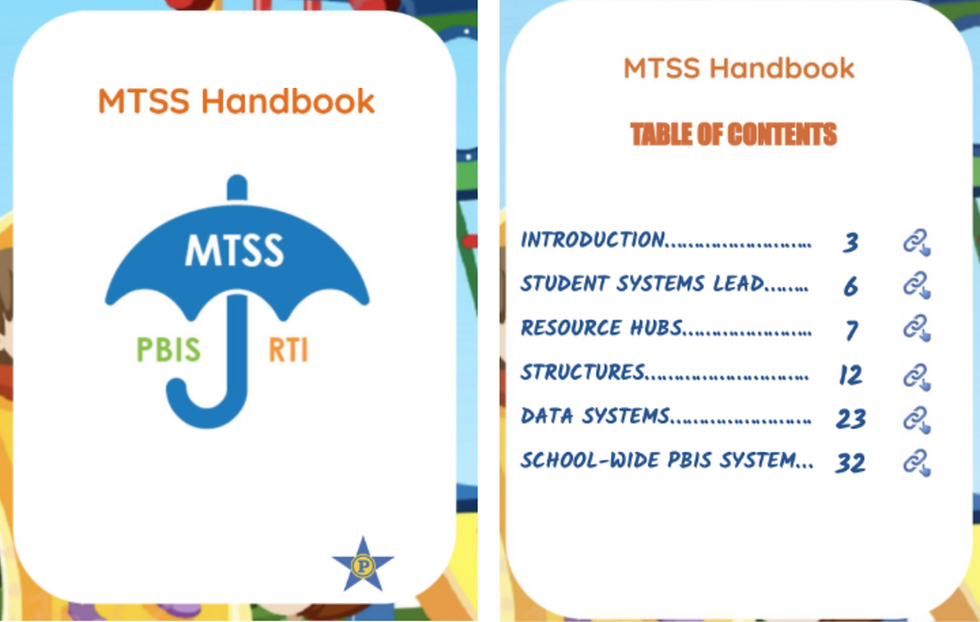
Beginning in fall 2021, the school adopted a schoolwide MTSS system designed to support students across grades, classrooms, and ability levels. The handbook organized that work into key components including the Student Systems Lead role, resource hubs, structures, data systems, and a schoolwide PBIS system. Together, these elements created a more transparent, predictable, and sustainable system for student support.
What made this work meaningful from a leadership perspective was not just the creation of documents. It was the development of a shared operating system for the school. The handbook became a practical leadership tool for building alignment, clarifying ownership, and improving consistency across teams.
Why a handbook mattered
One of the biggest challenges in MTSS implementation is not lack of effort. It is fragmentation. Schools often have strong people, good intentions, and many isolated interventions, but without a clear system, staff can experience confusion about roles, referral pathways, data use, intervention structures, and behavior supports.
The school's MTSS Handbook addressed that challenge by bringing the system into one place. It provided a central framework for how academic, behavioral, and language supports worked together, and it made the system more accessible for teachers and leaders. The handbook’s table of contents itself reflects that intentional design, organizing the work into introduction, Student Systems Lead, resource hubs, structures, data systems, and schoolwide PBIS.
1. The Student Systems Lead role created leadership capacity
A strong MTSS system needs clear ownership. At this elementary, the handbook included a Student Systems Lead services menu that outlined support across MTSS, PBIS, and language systems. The role included teacher consultation, student support through meetings and observations, intervention planning, behavior planning, small-group supports, data sharing, and staff training. It also connected to language development support and schoolwide behavior systems.
From a leadership standpoint, this mattered because it moved the role beyond crisis response. Instead of functioning as a catch-all position, the Student Systems Lead role was defined as a systems-building role.
Clear service menus help schools do three important things:
They clarify what support staff can expect.
They define how leadership time should be spent.
They prevent key roles from being pulled only into reactive problem-solving.
This kind of clarity builds staff trust and improves implementation because people know where to go for help and what kind of support the system is designed to provide.

2. Resource hubs reduced friction and increased access
The handbook describes resource hubs developed in collaboration with teachers and the Instructional Leadership Team to keep tools “at your fingertips.” These included an MTSS hub, a PBIS hub, and an ELD/ICLD hub.
This is more important than it might seem. In many schools, valuable tools exist, but they are scattered across folders, emails, slide decks, and individual staff knowledge. When that happens, implementation depends too heavily on who remembers where things are.
The resource hub approach made the system more usable. It helped staff access planning documents, schedules, meetings resources, assessment links, system documents, instructional tools, communication materials, and video resources in one place. That is a leadership move, not just an organizational one. Good leaders do not simply tell people to implement systems. They remove barriers to implementation.
A resource hub improves:
staff access to tools
onboarding for new teachers
consistency across classrooms and teams
reliability of implementation over time
In other words, it turns systems from ideas into daily practice.

3. Structures created transparency and predictability
One of the clearest strengths of the handbook is its emphasis on structures. The handbook explicitly states that structures are used throughout the system to ensure transparency and consistency.
The system included a six-session yearly calendar, SWAT assessment structures, eight MTSS data meetings per year, student support protocols and requests, and WIN intervention blocks. It also included school-specific adjustments such as increased executive functioning groups, increased social skills groups, enrichment supports, a consequence pyramid, a Star Ticket system, weekly guidance from the school social worker, and a Leadership Lab.
This is where leadership really shows up. Strong school systems do not happen because staff work harder. They happen because leaders design repeatable structures that reduce ambiguity.
The handbook included concrete structures such as:
an RTI planning matrix
teams at each tier
an MTSS one-pager
a WIN/MTSS session calendar
a WIN/MTSS block schedule
an MTSS contact list
movement between tiers guidance
a student support protocol
a student support request process
a parent notification letter
Each of these tools served a leadership function. Together, they answered questions like:
Who owns what?
What happens first?
How do students move between levels of support?
When do teams meet?How are families informed?
How do we protect consistency across grade levels?
That is what effective leadership looks like in systems work. It makes complex work visible, usable, and shared.

4. Data systems helped the school move from opinion to action
The handbook states clearly that assessments and data systems drive the schoolwide program.
That principle matters. In strong MTSS implementation, data does not sit on a spreadsheet waiting for compliance checks. It drives decisions about screening, grouping, progress monitoring, intervention planning, and movement between tiers.
The schoolwide system outlined assessment tools by frequency, type, skill area, and purpose. These included SEL screening, academic screening and benchmarking in math and literacy, literacy progress monitoring, placement assessments, and classroom-based formative assessments used to drive Tier 1 and Tier 2 intervention groups.
The handbook also included semester assessment plans, a student database, MTSS data meetings, grade-level schedules, active interventions, intervention plans, and an intervention selection tool.
From a leadership lens, this is essential. Data systems are not just about collecting information. They are about creating a decision-making rhythm across the school. When leaders establish shared assessment plans and structured data meetings, they help teams shift from scattered responses to coordinated action.
Strong MTSS leadership asks:
What data do we collect?
When do we collect it?
Who reviews it?
How does it connect to intervention decisions?
What happens next for students?
The handbook addressed those questions through system design, not guesswork.

5. PBIS was developed as part of the broader school system
The handbook also positioned PBIS as a schoolwide system that was developed over time. It notes that the schoolwide PBIS system was built gradually, beginning with positive systems in year one and expanding to a behavior pyramid in year two.
That gradual development matters. Leadership teams often try to implement too much at once. A phased approach allows a school to build staff understanding, strengthen routines, and increase buy-in before layering on more complexity.
Within the broader system, PBIS supports included the consequence pyramid, Star Ticket system, weekly guidance from the school social worker, and Leadership Lab. The PBIS hub also centralized behavior tools, expectations, communication resources, refocus sheets, and class-level systems.
From a leadership perspective, this reinforces an important lesson: behavior systems work best when they are integrated into the school’s overall student support framework. PBIS should not sit on the side as a separate initiative. It should connect to intervention systems, staff support, schoolwide expectations, and decision-making processes.

Leadership lessons from building the handbook
Looking back, the biggest lesson from this work is that effective MTSS leadership is not just about knowing intervention practices. It is about designing the conditions that allow those practices to happen consistently.
A strong handbook can help leaders:
clarify roles and decision points
organize tools into accessible systems
establish predictable meeting and assessment rhythms
connect academics, behavior, and language support
support onboarding and staff consistency
make implementation less dependent on individual memory or initiative
In that sense, the handbook was not just a document. It was a leadership tool for coherence.
Final reflection
Schools do not improve student support through isolated programs alone. They improve it by building systems that make effective support more likely, more visible, and more sustainable.
At this high-achieving elementary school, the MTSS Handbook helped turn a complex body of work into a shared schoolwide framework. By organizing leadership roles, resource access, structures, data systems, and behavior supports, it created a stronger foundation for consistent intervention and collaborative problem-solving across the school.
For school leaders, that is the real value of systems work.
When the system is clear, staff can focus less on figuring out the process and more on supporting students.

Comments