


%20(1)_edited_edited_edited.png)
Building Independence Through Work Systems in Special Education Classrooms

One of the most important lessons I have learned in specialized classrooms is this: independence does not happen by accident. It has to be designed.
In high-support settings, it is easy for adults to become the system. Adults remind, redirect, organize, repeat directions, move materials, and help students start every task. That may keep the day moving in the short term, but it can also create dependence if the classroom is not built around clear structures that students can learn to follow on their own.
That is why work systems matter so much.
A strong work system gives students a predictable structure for completing tasks with greater clarity and less adult prompting.
It helps answer the questions many students need made visible:
What am I supposed to do?
How much do I have to do?
When am I finished?
What comes next?
What a work system actually does
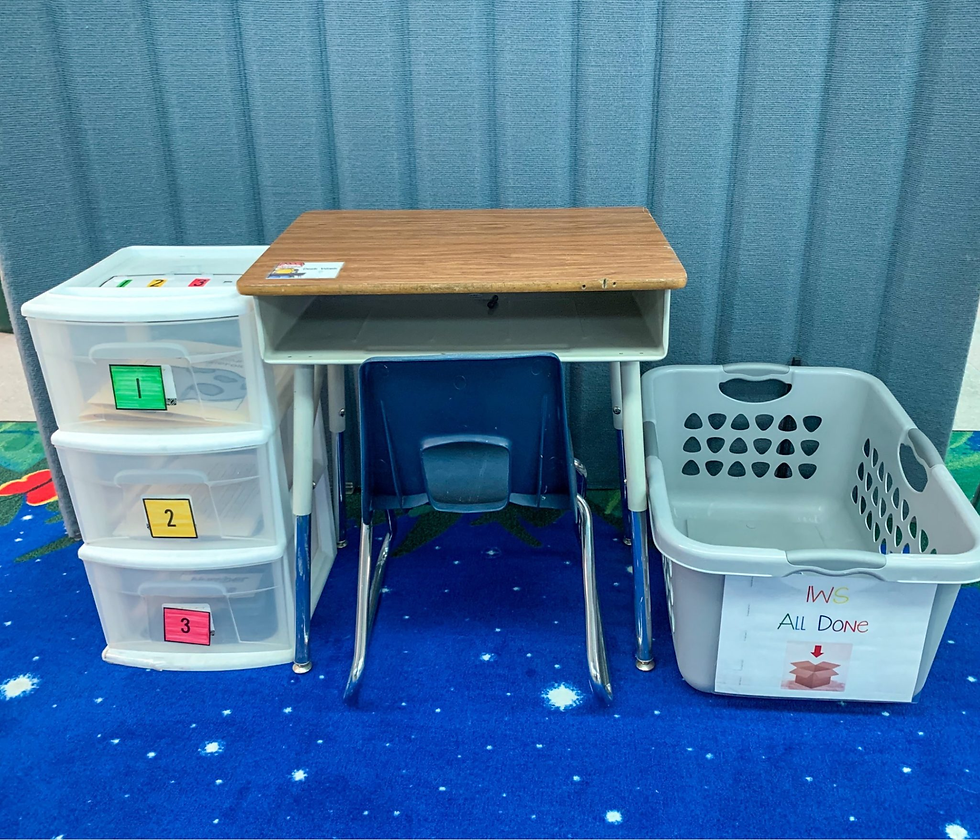
A work system is more than a bin of tasks or a quiet table in the corner. It is a classroom structure that teaches students how to move through work with greater independence.
In practice, that means the system is set up so students can:
find their work
understand the order of tasks
complete a defined amount of work
know when they are done
transition to the next activity
Your work system materials emphasize that independent work stations should be structured with clearly organized activities and visuals, often including multiple tasks arranged in a sequence. They also highlight the value of reducing distractions and making expectations concrete.
That clarity matters. In many classrooms, students are not struggling only because the task is hard. They are also struggling because the structure is unclear. When adults have to explain every step every time, independence remains out of reach.

Independence is built through structure, not hope
One of the biggest misconceptions in special education is that independence comes from expecting it harder or talking about it more. In reality, independence usually grows when the environment becomes more supportive, more predictable, and more intentionally designed.
That is why visual structure plays such a large role in effective work systems. Across the communication board materials, you included examples of break cards, visual schedules, help cards, token boards, and choice visuals. These kinds of supports reduce language load, make routines more visible, and give students clearer access to what is expected.
For some students, a visual schedule may be the support that helps them move from one task to the next. For others, a help card or break card may reduce escape behaviors by showing a more appropriate way to communicate need. For others, a token board may make the work period feel manageable and concrete. These are not extras. They are part of the system.
When classrooms use these supports consistently, students do not have to rely only on adult verbal reminders. The environment begins to carry more of the load.

The goal is not task completion alone
A weak work system can still produce finished tasks. Adults can prompt heavily, redirect constantly, and keep students moving. But that is not the same as building independence.
A stronger question is this: how much of the work is the student doing, and how much of the work is the adult doing?
That is where prompting matters. If the system is clear, adults can support students without over-prompting them. If the system is unclear, adults often end up filling every gap. Over time, that can create learned dependence, where students wait for the next cue instead of using the classroom structure to guide themselves.
This is one reason I believe classroom systems matter so much in high-support programs. They shape not just whether work gets done, but how students learn to participate in it.
What strong implementation looks like
The strongest work systems are not random activities placed in a station. They are built intentionally.
Your implementation guidance points to several practices that matter:
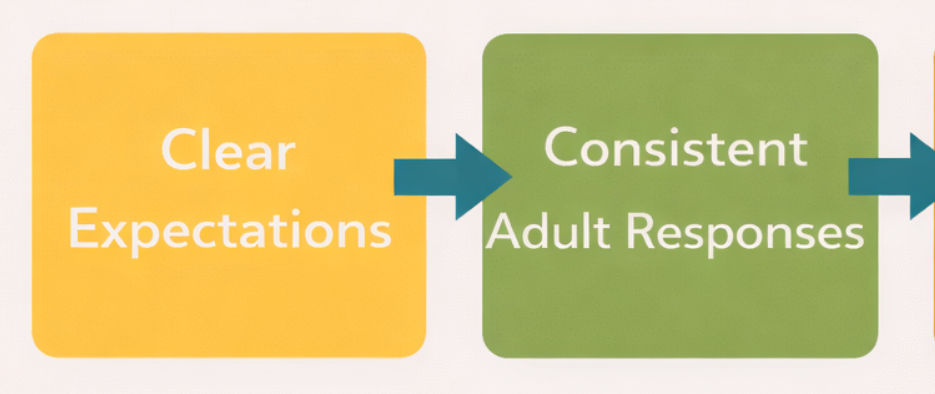
clear expectations
visual schedules
organized materials
positive reinforcement
progress monitoring
minimizing distractions
gradually reducing support over time
That last piece is especially important. Good systems do not freeze students at one level of support. They help adults know when and how to fade assistance.
In the same way, the MI proactive support plan shows how visual schedules, First-Then cards, transition warnings, and calm, simple directions can help prevent problem behavior before it escalates. It also shows that when students struggle, adults should move closer, guide, and reinforce compliance rather than repeating directions from across the room.
That is a systems mindset. Instead of blaming the student when things break down, adults ask whether the structure is clear enough, supportive enough, and consistent enough.
Why this matters for classroom teams
Work systems are not just student tools. They are also adult alignment tools.
When a classroom has a strong work system, adults have a shared structure to follow. They know where students should be, what supports are available, how tasks are organized, and what independence is supposed to look like. That reduces inconsistency across staff and helps paraeducators, teachers, and specialists support students in more coordinated ways.
That is one reason I keep coming back to systems in my work. Strong classrooms are not built only on good intentions or hard work. They are built on structures that make good practice more likely.
In high-support classrooms, this matters even more. Students often rely on the adults around them to create order, predictability, and instructional access. If those systems are weak, students feel it quickly. If those systems are strong, students gain more opportunities to participate, communicate, and work with growing independence.
 |  |  |
 |  |  |
What this means for my leadership
This is one of the clearest ways my leadership has evolved. I no longer think about independence only as a student outcome. I think about it as a systems outcome.
If a student cannot work, transition, ask for help, or complete a routine without constant adult support, I want to know more than whether the student has a disability-related need. I also want to know whether the classroom systems are doing their job.
Are expectations visible?
Are materials organized?
Are supports consistent across adults?
Are we prompting in a way that builds independence, or in a way that replaces it?
Are visual supports and work systems helping students understand what to do next?
Those are leadership questions, not just classroom questions.
Because in the end, independence is not built by asking students to need less support. It is built by designing classrooms that support them better.

 | In many special education classrooms, students become overly dependent on adults because work expectations, task sequences, and supports are not organized clearly enough to promote independence. |
 | A strong work system uses visual structure, organized materials, predictable routines, reinforcement, and clear task design to help students know what to do, complete work in sequence, and move through activities with less adult prompting. |
 | When work systems are implemented well, students can participate more independently, adults can provide more consistent support, and classrooms become calmer, clearer, and more instructionally effective. |

Comments