


%20(1)_edited_edited_edited.png)
Building Systems That Actually Support Students: The Special Education Team Handbook

Updated: Apr 5
There is a quiet truth in special education that most people working inside the system already know:
The biggest barrier is rarely effort. It’s clarity.
Across schools, we see hardworking, dedicated professionals doing everything they can for students. And yet, outcomes remain inconsistent. Not because people don’t care. Not because they aren’t skilled.
But because the system they are working within is unclear.

The Problem
In many schools, special education operates in a constant state of reaction:
Case managers are juggling timelines, compliance, and instruction
Service providers are trying to align schedules and services
Teachers are navigating accommodations, behavior, and academic gaps
Paras are doing critical work without consistent guidance
Even when districts provide processes and expectations, there is often still confusion at the school level:
When do we act?
Who owns what?
What does “done well” actually look like?
How do we respond when something breaks down?
That confusion creates variability and variability creates inequity.

The System
The Special Education Team Handbook was built to eliminate that confusion.
It is designed to bring one thing above all else:
Clarity.
Not more paperwork. Not more initiatives. Not more meetings.
Just clear, shared understanding of how the system works.
The handbook organizes the work of special education into defined, actionable systems, including:
Case management expectations
IEP development and compliance processes
Service delivery structures
Collaboration norms across roles
Communication systems with families and staff
Problem-solving pathways when challenges arise
It answers the questions that teams often carry silently:
What exactly is expected of me?
What does strong practice look like here?
What do I do when something doesn’t go as planned?

The Core Belief
This work is grounded in a simple but powerful idea:

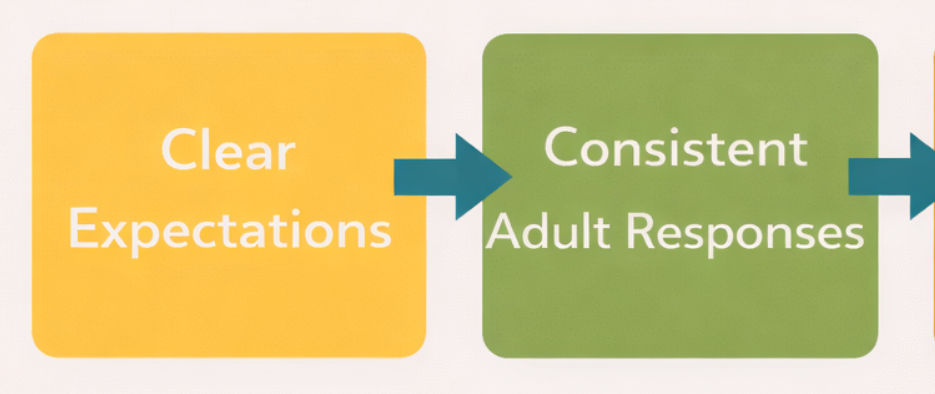
When expectations are clear:
Adults act with confidence
Decisions happen faster
Energy shifts from confusion to action
When practice becomes consistent:
Students receive more reliable support
Teams collaborate more effectively
Systems become sustainable instead of reactive
And when both are in place:
Students benefit.
The Leadership Behind It
This handbook reflects how I approach leadership.
I believe in building systems that:
Remove ambiguity
Support people in doing their best work
Create equity through consistency
Balance compliance with real, meaningful impact
My role as a leader is not to hold the system together through effort.
It is to design systems that hold themselves together through clarity.

Why This Matters
Special education is too important to rely on individual heroics.
When systems are unclear, the burden falls on individuals:
The teacher who stays late to figure it out
The case manager who carries the timeline in their head
The para who learns through trial and error.
That is not sustainable and it is not fair to students.
We can do better.
The Goal
The goal of this handbook is simple:
To create a system where:
Expectations are clear
Roles are defined
Support is consistent
Problem-solving is structured
And students receive what they need without delay or confusion
Because when the system works…
People can focus on what actually matters: students.

Closing
This handbook is not the final answer.
It is a foundation.
A living system that can evolve, adapt, and improve over time.
But most importantly, it is a step toward something better:
A school where clarity replaces confusion where systems replace stress and where every student has access to the support they deserve

Comments