


%20(1)_edited_edited_edited.png)
Designing a PBIS System That Drives Clarity, Consistency, and Culture

Behavior systems exist in almost every school.
But too often, they live on paper instead of in practice.
Even when districts provide frameworks, schools frequently struggle with:
When to act
How to respond
What consistency actually looks like across classrooms
The result is predictable:
Inconsistent adult responses
Confusion for students
Increased reliance on administration
Missed opportunities to teach behavior
This project focused on designing and implementing a clear, schoolwide PBIS system that removes ambiguity and supports staff in real-time decision making.
The goal was simple:
Create a system that is clear, organized, and responsive to the highest-need areas for staff and students.

The Problem: Lack of Clarity at the Point of Action
In many schools, behavior expectations exist, but they are not:
Explicit enough for students
Consistent enough across staff
Structured enough for decision-making
Even strong teams can fall into patterns where:
Expectations vary by classroom
Consequences depend on the adult
Staff are unsure when to escalate or support
Systems rely on individuals instead of processes
This creates friction across the entire school system.
The System: A Clear, Actionable PBIS Framework
This PBIS system was designed through collaboration with teachers, paraprofessionals, and leadership teams to ensure it was both practical and sustainable.
The focus was not just on defining expectations, but on building usable systems that guide daily practice.
1. Schoolwide Expectations That Are Visible and Teachable
Clear expectations were defined across all settings using shared language:
Safe
Respectful
Responsible
Scholarly
These expectations were broken down into specific, observable behaviors for each environment.

Visual posters were placed throughout the building to ensure:
Consistency across classrooms and spaces
Easy reference for staff and students
Ongoing reinforcement of expectations
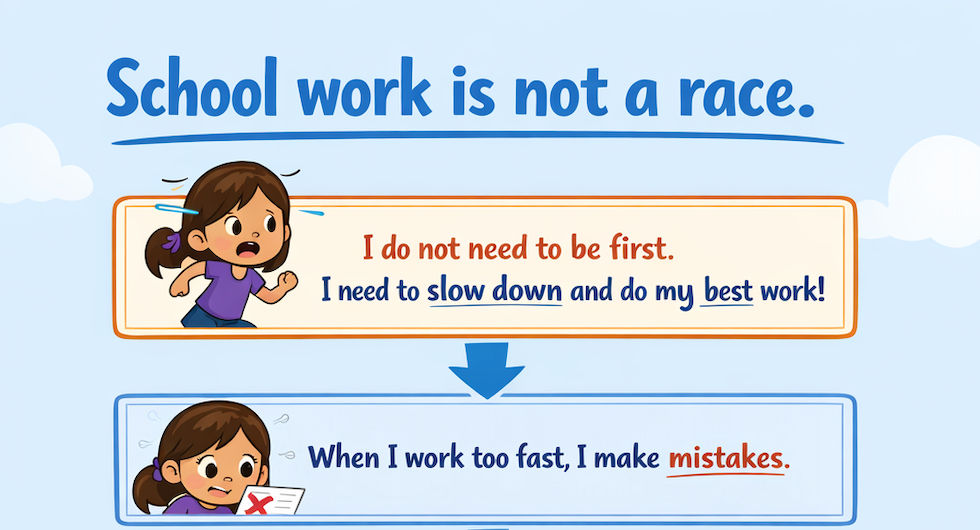
Examples of these visuals include hallway and recess expectation posters.
2. A Behavior Response System That Removes Guesswork
A structured behavior response system was created to define:
Levels of behavior
Appropriate responses
When to involve additional support
This ensured that staff were not asking:
“What should I do?”
Instead, they had a shared understanding of:
“This is how we respond.”
The system aligned to district frameworks while providing clarity at the school level, where confusion most often occurs.

3. Reflection Structures That Teach Behavior
Rather than relying solely on consequences, the system incorporated structured reflection tools.
Students were guided to:
Identify what happened
Reflect on their actions
Understand impact on others
Plan how to repair harm
These tools supported a shift from:
Compliance → Ownership
Punishment → Learning
4. Clear Adult Actions and Processes
A critical component of the system was defining what adults do in the moment.
Processes were established for:
Requesting support
Responding to escalation
Documenting incidents
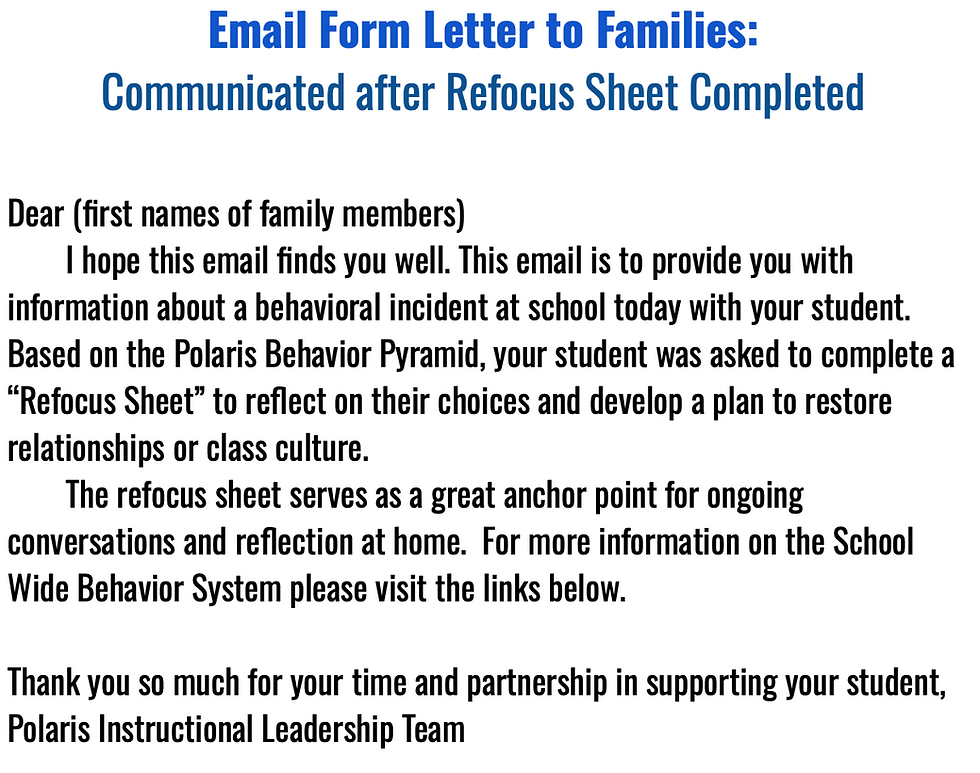
Communicating with families
This removed one of the most common barriers in schools:
Uncertainty at the point of decision-making.
Instead of relying on individual judgment alone, staff operated within a shared system.

5. Consistent Family Communication
The system embedded communication with families as a standard practice.
This ensured:
Transparency
Consistency in messaging
Alignment between school and home
Communication focused on both the incident and the learning process, reinforcing the purpose of the system.
6. Restorative Practices as a Foundation
Restorative practices were integrated throughout the system to support:
Conflict resolution
Relationship repair
Student accountability
This ensured the system focused not just on behavior correction, but on community and growth.

The Impact: A System That Supports Daily Practice
Staff
Increased clarity and confidence
Reduced inconsistency across classrooms
Stronger alignment across teams
Students
Clear, predictable expectations
Improved self-awareness
Increased accountability
Leadership
Fewer escalations due to inconsistency
More time for proactive support
Stronger system coherence
Families
Clear communication
Increased trust
Better understanding of school expectations
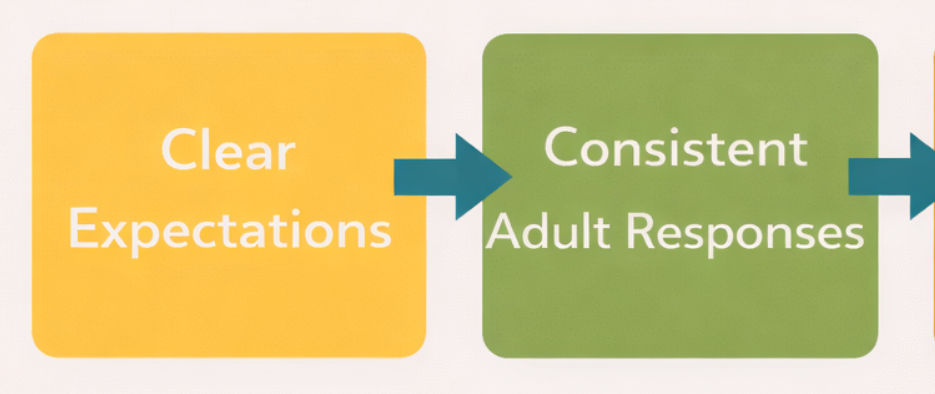
The Core Idea: Clarity → Consistency → Better Outcomes
At its core, this work demonstrates a key principle:
Systems drive outcomes.
When expectations are clear and responses are consistent:
Staff can act confidently
Students can respond predictably
Schools can function more effectively
About the Work
This system was developed and implemented within an elementary school setting through collaboration with staff and leadership teams. It reflects a broader approach to designing scalable, schoolwide systems that improve clarity, consistency, and outcomes.

Comments