


%20(1)_edited_edited_edited.png)
Why Evaluation Systems Fail When They Prioritize Compliance Over Capacity

 | One of the clearest lessons I have learned through leadership is that evaluation systems can look strong on paper and still fail the people they are supposed to support. That usually happens when the system becomes too focused on compliance and not focused enough on capacity. Compliance matters. Schools need clear expectations, documentation, timelines, professionalism, and accountability. None of that is optional. But when evaluation becomes little more than checking boxes, collecting artifacts, or confirming that a process was completed, it stops doing its most important work. It stops helping people grow. |
That is where strong leadership matters most.
Compliance is necessary, but it is not the purpose
A healthy evaluation system includes compliance. It has to. Schools are responsible for legal requirements, role expectations, student services, and professional responsibilities. Leaders cannot ignore those things, especially in specialized roles where documentation, communication, timelines, and service coordination are essential.
But compliance is not the purpose of evaluation.
The purpose of evaluation is to improve practice, clarify impact, strengthen professional growth, and build better conditions for students. When leaders lose sight of that, evaluation becomes narrower and less useful. Staff begin to experience it as surveillance rather than support. Evidence becomes paperwork instead of reflection. Feedback becomes procedural instead of developmental.
That shift is subtle, but it changes everything.
Schools build capacity when evaluation helps people improve
Capacity is what allows a school to get stronger over time.
It is the ability of teachers, specialists, and teams to improve their knowledge, judgment, systems, and practice. It is what helps schools solve problems more effectively, collaborate more clearly, and respond to student needs with greater skill and consistency.
Strong evaluation should contribute to that.
It should help staff understand what strong practice looks like. It should give them meaningful feedback. It should create clearer connections between their daily work and student outcomes. It should help leaders identify where support, coaching, collaboration, or systems improvement are needed.
In other words, evaluation should not just measure work. It should strengthen the people doing the work.
When compliance takes over, evaluation gets smaller
One of the dangers of compliance-heavy evaluation is that it shrinks leadership thinking.
Instead of asking:
Is this person growing?
Is the work improving?
Is the system building stronger practice?
Are students benefiting from stronger adult capacity?
Leaders can drift into asking:
Is the form there?
Was the meeting held?
Was the document uploaded?
Is there enough evidence in the folder?
Those questions are not meaningless. But they are incomplete.
A compliance-first mindset can make leaders feel organized while missing whether the actual practice is improving. It can also create frustration for staff, especially when their most meaningful work is reduced to technical completion rather than thoughtful professional judgment.
That is when evaluation starts to lose credibility.

Specialized staff make this especially visible
This issue becomes especially clear when evaluating specialized staff.
Many specialized roles include work that is distributed across service settings, staff collaboration, planning, documentation, family communication, progress monitoring, consultation, and team problem-solving. Some of that work is visible in direct interaction. Much of it happens off-stage.
If leaders approach evaluation with a narrow compliance lens, they can overvalue what is easiest to count and undervalue what is hardest to see. They may focus heavily on paperwork while missing the quality of problem-solving. They may confirm that services are documented without really examining whether those services are coherent, responsive, and helping reduce barriers for students.
That is a leadership problem, not a staff problem.
It means the evaluation system is not fully aligned to the work.
Capacity grows through clarity, coaching, and shared learning
If leaders want evaluation to build capacity, they have to create the conditions for it.
That means more than giving people a rubric. It means:
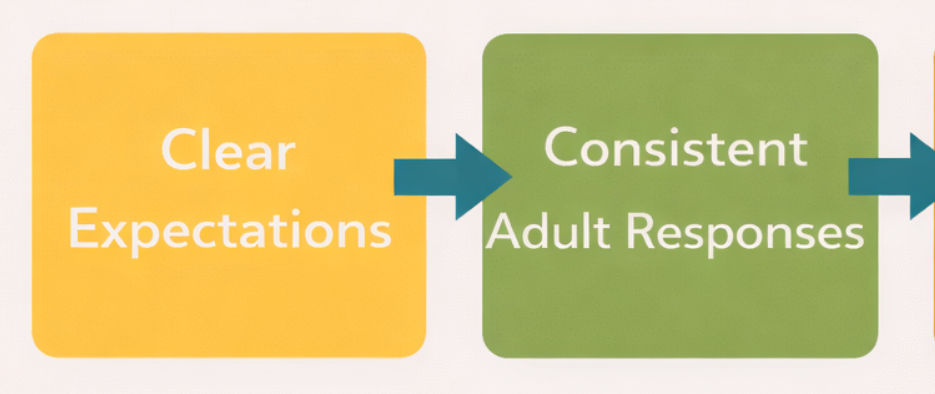
clarifying expectations in role-specific ways
identifying meaningful evidence
using observations and artifacts together
creating space for staff to ask questions
giving feedback that improves practice
helping teams develop shared understanding over time
That is why PLCs, coaching cycles, collaborative evidence review, and reflective conversations matter. They move evaluation out of a purely managerial space and into a developmental one.
Strong evaluation cultures are built through repeated opportunities for people to understand the work more deeply and improve it more intentionally.
Good leaders use compliance as a floor, not a ceiling
This may be the simplest way I would put it now.
Compliance should be the floor. It should not be the ceiling.
Leaders absolutely need to ensure that core responsibilities are being met. But once that foundation is in place, the real leadership work begins. That is where evaluation should help people refine practice, solve problems, build judgment, and strengthen their impact.
The strongest systems do both:
they protect accountability
and they build capacity
When one is missing, the whole system gets weaker.
If accountability is missing, schools drift.If capacity-building is missing, schools stagnate.
Strong leadership refuses both.
What this means for my leadership
This work has pushed me to think more carefully about the kind of evaluation culture I want to help build.
I want systems that are clear and accountable, but also human, developmental, and connected to the actual work people do. I want evaluation to be rigorous without becoming mechanical. I want it to help people organize evidence, reflect honestly, improve practice, and contribute more strongly to the team and the school.
Most of all, I want evaluation to lead somewhere.
Not just to a score, a rating, or a completed process, but to stronger practice, stronger systems, and stronger support for students.
That is why I believe evaluation systems fail when they prioritize compliance over capacity.
Not because compliance is unimportant.
Because it is not enough.

 | Evaluation systems become less effective when they focus too heavily on procedural compliance and not enough on strengthening professional knowledge, judgment, and practice. |
 | A stronger evaluation approach treats compliance as a necessary foundation while also building capacity through clear expectations, meaningful evidence, coaching, shared learning, and reflective feedback. |
 | When evaluation builds capacity, staff gain more clarity, stronger support, improved practice, and greater ownership of growth. Schools gain a more credible, developmental, and effective system for improving adult practice and student outcomes. Compliance asks whether the form is done. Coaching asks whether the work is getting stronger.Leadership should care about both, but it should never stop at the first one. |

Comments